Airport eGates struggle with flawed facial scans and passport chips
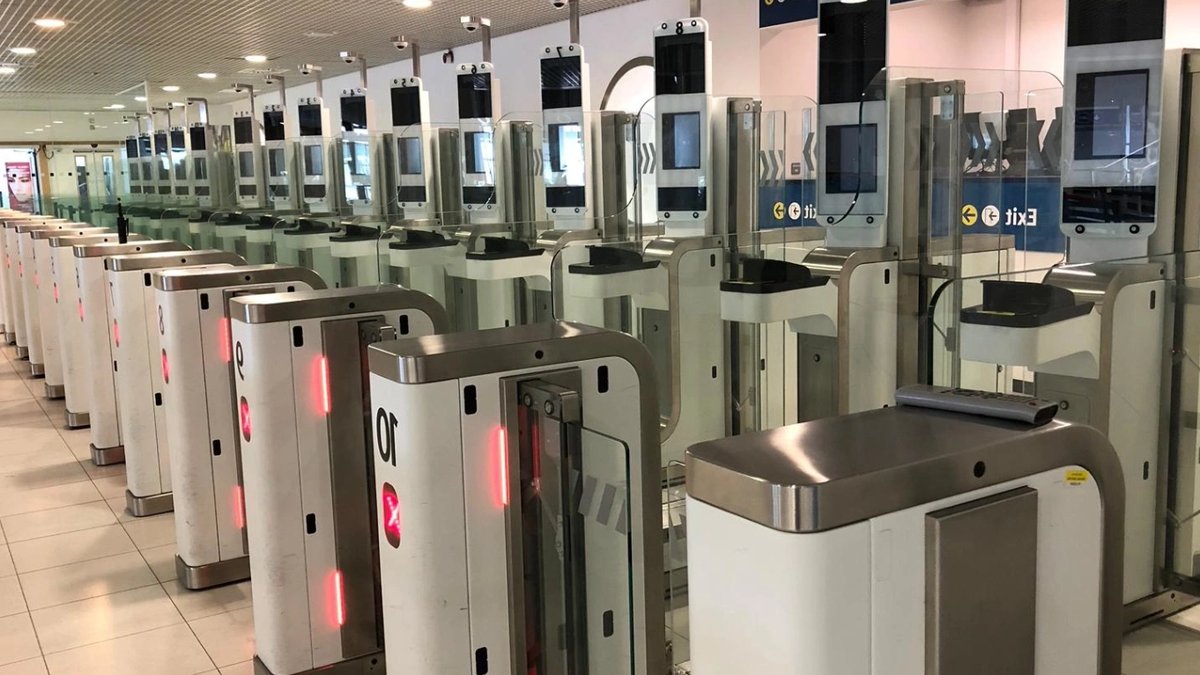
A traveler approaches an automated border control gate at an airport, expecting a smooth passage. When the gate fails to open, the moment can feel like a personal rejection. Yet the system does not function as a judgment on the traveler’s legitimacy. Instead, it signals that automated checks could not achieve the required level of certainty. The process is structured to handle doubt by directing questionable cases to a human officer for further examination.
An automated border gate performs multiple functions beyond facial scanning. It examines the passport, verifies the embedded electronic chip, captures a live facial image, and compares it to the stored photograph. It also determines whether the traveler qualifies for automated processing. The International Civil Aviation Organization (ICAO) defines automated border control as a supervised self-service process integrated with broader border management systems. Only when all required checks—document validation, identity verification, and eligibility assessment—are satisfied does the gate admit the traveler.
If any verification step fails, the gate halts the process, even for legitimate travelers. The design prioritizes accuracy over speed. False non-matches occur when two images of the same individual fail to align, while false positives incorrectly associate different people. These errors carry distinct risks and must be monitored separately to maintain system reliability.
Image quality derails automated border checks
One leading cause of non-matches is substandard image quality. Factors such as backlighting, glare, improper camera angles, or an obscured face can disrupt facial recognition. Even a passport photograph taken years earlier may no longer resemble the traveler’s current appearance. Research by the National Institute of Standards and Technology (NIST) demonstrates that capture conditions significantly impact face-recognition performance. To mitigate this, gates should provide clear instructions, accommodate varying traveler heights, and allow multiple attempts before escalating to an officer.
Another frequent issue involves damaged or unreadable passport chips. These chips store encrypted biometric and document data, and if authentication fails, the automated process stops. The chip’s digital signature must also validate against ICAO’s Public Key Directory. Successful validation allows authorities to trust the chip data for further checks, while failure requires manual review rather than automated assumptions.
Manual review is not a secondary option but a deliberate component of the system’s design. ICAO guidelines specify that officers handling secondary checks must have appropriate tools, training, and expertise to resolve biometric failures. An effective system provides officers with detailed referral reasons—whether the issue stems from image quality, a chip malfunction, eligibility rules, or an official alert. A simple red or green indicator is insufficient for responsible decision-making.
Read Also: Nedbank secures majority stake in Kenya’s NCBA
Human oversight remains critical for fairness
For travelers, encountering a gate rejection can be frustrating. The system does not reject them personally but identifies cases requiring human judgment. The alternative process must be transparent and accessible. Airports should inform passengers about eligibility for automated gates, procedures after a failure, and where to seek assistance. The manual process should not feel like punishment for a technical issue.
Beyond image and chip issues, non-matches can arise from how automated systems interpret eligibility criteria. Some travelers may hold documents that meet ICAO standards but are not recognized by a specific country’s border system. For example, a passport might be valid under international law but lack the required machine-readable zone or biometric data format for an eGate’s local configuration. These inconsistencies trigger manual review, even when the traveler’s identity is valid. Authorities must ensure their eligibility rules align with both ICAO standards and the technical capabilities of their eGate providers, as mismatches create delays without enhancing security.
The decision to escalate a case depends on the system’s confidence threshold. A gate set to high sensitivity rejects more travelers, including legitimate ones, to minimize false positives, while a lower threshold accelerates processing but may overlook irregularities. ICAO does not mandate a universal threshold, leaving countries to balance risk tolerance with operational efficiency. Kenya’s border agencies must determine whether their thresholds account for local factors, such as variations in passport quality or passenger demographics. Adjusting these settings requires real-world testing, not just vendor claims, to prevent over-reliance on automation at the expense of precision.
Officers need precise data to resolve failures
When a traveler is directed to an officer, the system must provide more than a generic alert. Effective secondary checks depend on clear referral details, including whether the issue involves a failed facial match, a document anomaly, or an eligibility flag. Officers require access to raw biometric data, passport chip contents, and system-generated notes to assess the case. Without this information, they may rely on visual inspection alone, which is less reliable than automated tools. Vendors such as IDEMIA and NEC offer software that identifies specific problems, such as a damaged chip or poor-quality image, but authorities must configure these tools to display actionable data rather than error codes.
Equipment reliability is another frequently overlooked factor. A single malfunctioning camera or reader can disproportionately increase non-matches, yet such issues may not appear in vendor performance reports. Regular maintenance checks, including testing with Kenyan passports and airport-specific conditions, are critical. For example, a gate designed for European passport formats may struggle with the thicker pages or different chip placements found in Kenyan documents. Pre-deployment trials with local traveler demographics ensure the system accounts for real-world variations rather than theoretical benchmarks.


