GlobalFoundries Eyes Quantum Hardware Production Ramp Up
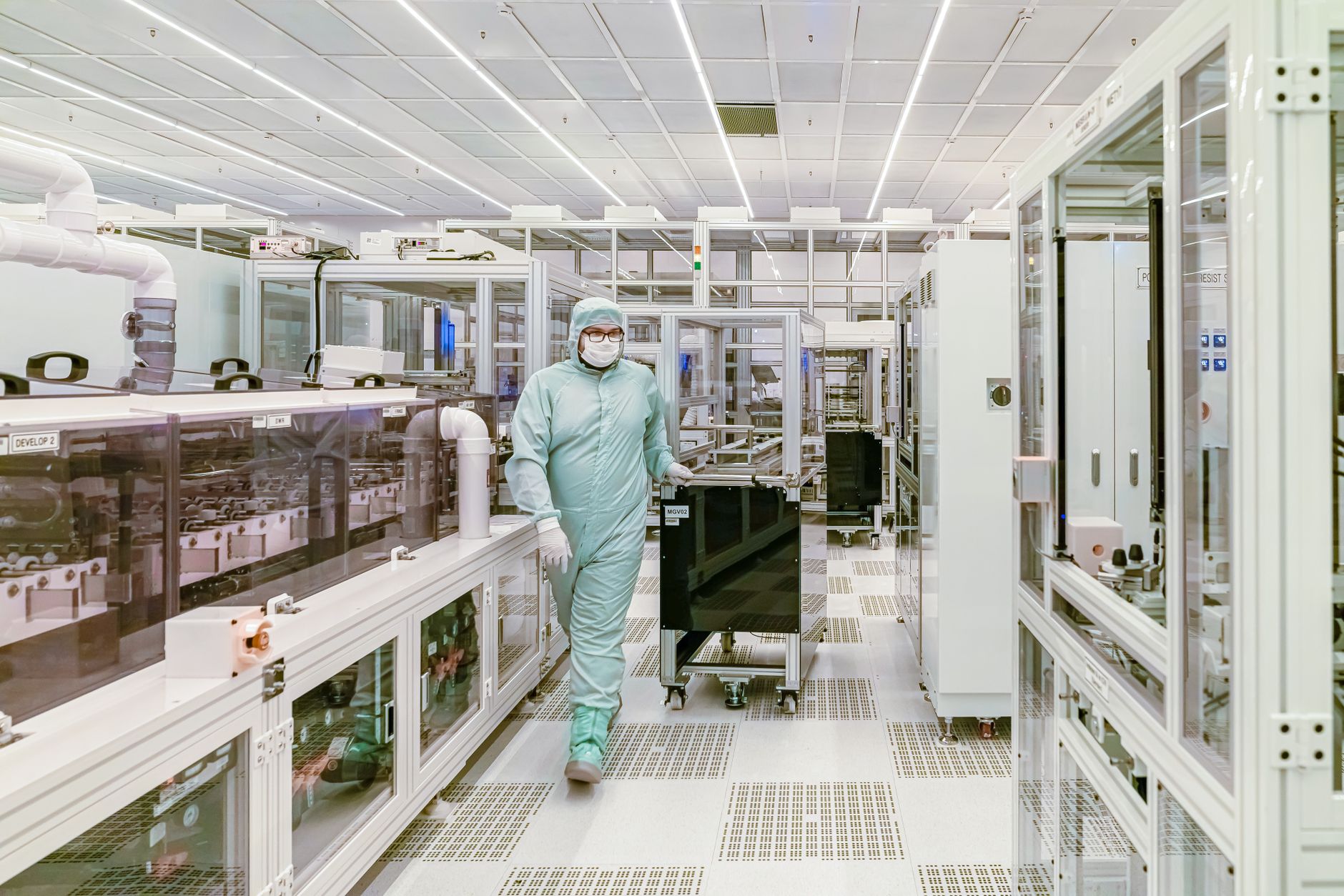
GlobalFoundries is moving aggressively to translate its semiconductor manufacturing expertise into quantum computing hardware. Two months after the launch of its Quantum Technology Solutions business unit, the company is focusing on scaling production to make quantum computers viable for commercial and government use. The initiative received a major boost in May when the U.S. Department of Commerce announced a $375 million investment to support the venture, part of a broader federal effort to increase domestic manufacturing capacity.
The primary goal is to move quantum systems beyond experimental stages with relatively few qubits to “something that looks a lot more like millions of qubits,” said Nicholas Sergeant, vice president and head of Quantum Technology Solutions at GlobalFoundries. This transition requires much more reliable manufacturing processes, which GlobalFoundries hopes to provide using its established semiconductor fabs. Sergeant noted that while their underlying technologies are a good starting point, some fine-tuning will be necessary to apply them to quantum mass manufacturing.
Downstream users in financial services, healthcare, and pharmaceuticals are already experimenting with quantum technology. A June report from Boston Consulting Group suggests the “commercial inflection point” could arrive by 2030, with quantum hardware’s trajectory currently “on track to reach commercially useful scale.” Matt Langione, managing director and partner at BCG and lead author of the article, said the industry is entering an era of scaling systems.
Related: AI coding success brings new challenges
Error correction is the critical hurdle. When error correction performs below a certain threshold, the error rate decreases as the system increases in size. Above the threshold, errors increase and overwhelm the computation. Langione described this threshold as the “baseline entry point for commercial, industrial quantum computing.” Demonstrations of below-threshold performance prompted government and industry investment, including the $2 billion federal bid to ramp up the sector.
Designing for extreme conditions
GlobalFoundries is focusing on platforms spanning multiple quantum modalities, including superconducting, trapped-ion, photonic, topological, and silicon-spin qubits. A key shared requirement identified by the company is the control of signals moving into and out of a quantum system. Classical electronic devices send pulses to manipulate qubits in the quantum processing unit (QPU), while other signals capture information for processing. As systems scale, the number of inputs and outputs increases, requiring new engineering solutions to route and process these signals.
Some modalities, such as superconducting and silicon spin, require extreme cooling, with signals moving through multiple temperature planes from room temperature to near absolute zero. Quantum systems use application-specific integrated circuits (ASICs) to manage these signals. However, using an off-the-shelf ASIC or process design kit will result in suboptimal attributes like area and heat dissipation. The performance predicted for a room-temperature ASIC might not hold in a super-cooled environment. GlobalFoundries will primarily provide quantum-optimized process design kits to help customers create ASICs that perform predictably at low temperatures.
Related: How to Make a Perfect App for Travellers
For current systems with just a few hundred qubits, optimized ASICs may not matter much. But Sergeant noted that when building millions of qubits, each requiring tight control and manipulation, companies can no longer afford not to use an optimized control ASIC.
Advanced packaging for scale
Sergeant drew a parallel between classical high-performance computing and the quantum world. In HPC, system-builders put together lots of heterogeneous ASICs into a single package to scale capabilities. GlobalFoundries aims to do the same in quantum, potentially placing multiple quantum computers on a fab or combining smaller units into a tightly controlled, integrated larger system. This approach relies on advanced packaging techniques such as 3D heterogeneous integration, which involves stacking smaller dies to form a larger system. This method could also bring cryogenic control ASICs closer to the quantum computing chip within a single package.

AI coding success brings new challenges


