Binance Exit Shows African Mining’s Energy Paradox
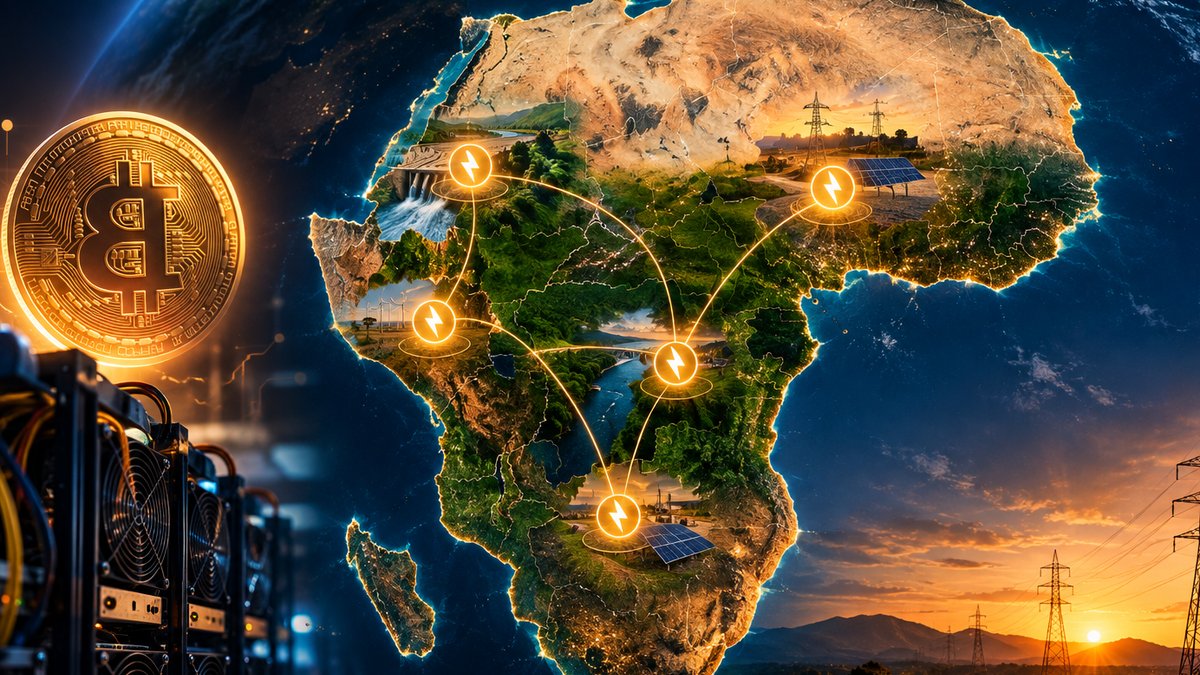
Bitcoin mining in Africa faces a paradox: the continent sits on vast, cheap energy resources but holds only 1–3% of the global hash rate. That imbalance is drawing attention as Binance prepares to shut down its mining pool on November 10, a move that will redirect thousands of miners to the four dominant pools controlling roughly 70% of Bitcoin block production.
The closure adds to a broader trend of mining consolidation. According to data from Mempool.space and Hashrate Index, Foundry USA, AntPool, ViaBTC and F2Pool accounted for about 70% of blocks mined as of September 2026. These pools primarily serve large institutional clients on negotiated fee structures, signaling a shift toward fewer, larger industrial-scale operators.
Global Mining Power Concentrates in Three Nations
Global mining power is heavily concentrated in a few countries. The United States leads with approximately 37.5% of the network’s 1,066 exahashes per second, followed by Russia at 16.4% and China at 11.7%—despite its official ban on mining. Together, these three nations control nearly two-thirds of Bitcoin’s computing power.
Africa’s potential contrasts sharply with its current contribution. Ethiopia stands out as the continent’s largest mining hub, with capacity growing from 12 exahashes per second in mid-2025 to 27.5 EH/s by early 2026, placing it eighth globally. Low industrial power costs—around $0.022 per kilowatt-hour—attracted miners, though the government froze new permits in mid-2025 citing grid constraints.
Read Also: Ecobank to Enable Direct Yuan Payments for Africa
Ethiopia and Nigeria Lead Africa’s Mining Efforts
Phoenix Group, a Gulf-based operator, launched a 30-megawatt facility in Addis Ababa’s Bole Lemi Industrial Park in partnership with Ethiopian Electric Power. Canaan, a Chinese hardware manufacturer, also operates in the country. However, the utility remains cautious. In August 2025, CEO Asheber Balcha stated no new mining contracts would be signed, describing the sector as a temporary source of $220 million in foreign currency.
Nigeria offers a different model. The country flared 6.63 billion cubic meters of gas in 2021, burning it instead of utilizing it. A commercialization policy now allows miners to use wasted gas, and private projects are developing mining capacity accordingly. Green Flare, a Nigerian startup, is building a 53-megawatt project across three Delta State sites under a gas connection agreement with OML 30 joint venture, overseen by the Nigerian Upstream Petroleum Regulatory Commission.
Despite these efforts, Nigeria’s mining footprint remains small compared to its energy potential. Kenya leverages geothermal resources and political stability, while Zambia benefits from low-cost power, although the World Bank discontinued its Doing Business rankings in September 2021 and replaced the series with Business Ready from 2024, so older rankings no longer provide a current picture of its business climate. The Democratic Republic of Congo’s hydro-dominated grid could expand access if mining demand funds infrastructure development.
Infrastructure and Policy Barriers Stall Growth
The real barrier is infrastructure and policy, not energy. High import tariffs on ASIC mining hardware and the lack of a secondary market for used equipment raise costs. Regulatory frameworks shift unpredictably, as seen in Ethiopia’s permit freeze, and capital flows toward markets with clearer signals and lower risk. Pool infrastructure is also lacking; African miners currently connect to pools in the U.S. or China, with no significant regional option to retain fees and governance locally.
Read Also: Low code AI helps Nigerian businesses
Binance’s exit creates a clear vacancy. African miners using its pool will migrate to Foundry USA or AntPool by November 10, but this does nothing to address the continent’s infrastructure gap or build local governance. A well-funded regional pool could serve East or West African operators with lower fees, local-language support, and payment structures in local currencies, but it faces significant hurdles: technical depth, working capital, and trust take years to build. Ethiopia’s uncertain mining future further complicates the outlook, as its current role as Africa’s mining hub may shrink if contracts are discontinued.
Binance Pool launched in 2019 and operated for over six years, yet it never cracked the top tier of global mining pools, making its shutdown a structural adjustment rather than a market-defining moment. This consolidation reflects a global shift where fewer institutional players dominate, sidelining smaller or exchange-affiliated operations.
Africa’s Potential and the Path Forward
Africa’s energy wealth remains underutilized in Bitcoin mining due to infrastructure gaps and policy uncertainty. Without clear regulatory frameworks and investment in power hardware, the continent cannot scale beyond its current 1–3% share of global hash rate. The absence of a regional pool further limits retention of fees and governance locally.
Africa Has the Energy to Power More
The world is building the infrastructure for the next decade of Bitcoin mining right now, and Africa has the energy to power a much larger share of it.


