Joby completes first fully autonomous cross-country flight
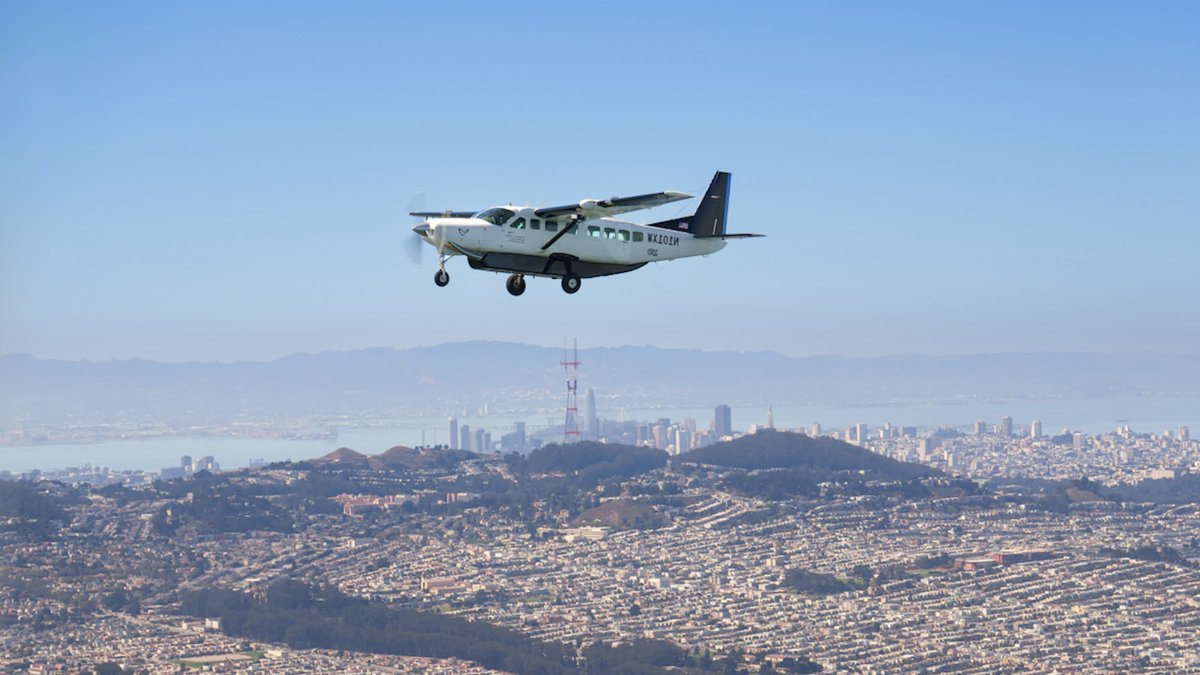
Joby Aviation has achieved the first fully autonomous cross-country flight in aviation history, completing a 3,199-mile journey across the U.S. without a pilot at the controls. The demonstration used a modified Cessna Caravan turboprop, outfitted with Joby’s autonomous system, which managed every phase of the flight, including taxiing, takeoff, landing, and mid-air rerouting, while requiring no human input.
The aircraft took off from Concord, California earlier this month, handling dense airspace near Phoenix and adjusting its route to avoid severe weather. It made scheduled stops at Alliance Airport in Fort Worth, Texas, and Shaw Air Force Base in South Carolina, before concluding with a low flyover of the First Flight Monument in Kitty Hawk, North Carolina, the historic site of the Wright brothers’ first powered flight in 1903.
A safety pilot was aboard, but the pilot did not help operate the aircraft. The system autonomously handled ground operations, weather avoidance, and airport procedures, including taxiing and landings. This represents the first time an aircraft has completed a fully autonomous cross-country mission, demonstrating performance across diverse terrain and air traffic conditions.
Joby’s autonomous system was validated using the Cessna Caravan, a single-engine turboprop frequently deployed for cargo, utility, and regional passenger transport. Its suitability for smaller airports and remote locations makes it an ideal testbed for real-world autonomous flight applications. The company intends to repeat the journey on the return leg, with planned stops in Washington, D.C., Kentucky, Kansas, Oklahoma, Utah, and Oregon.
Read Also: North Korean hackers steal $10M in crypto via fake jobs
While autonomous flight has been explored in military and research contexts, such as a self-piloted helicopter by Piasecki Aircraft Corp. and Carnegie Mellon University in 2010, Joby’s test distinguishes itself by covering the entire flight envelope, including ground operations. Existing commercial automation focuses on altitude, navigation, and stability, but Joby’s system controls the full mission profile.
Joby Aviation CEO JoeBen Bevirt emphasized the technology’s potential for cargo transport, emergency response, and defense applications. He said autonomy has an important role to play in the future of flight, adding that it could help “connect remote communities, deliver critical supplies, respond faster to disasters, support military operations, and keep pilots out of harm’s way.”
The upcoming return flight will gather further performance data under varying conditions, though broader adoption hinges on regulatory approval and additional validation.


