Uber Commits $10 Billion to Robotaxi Expansion
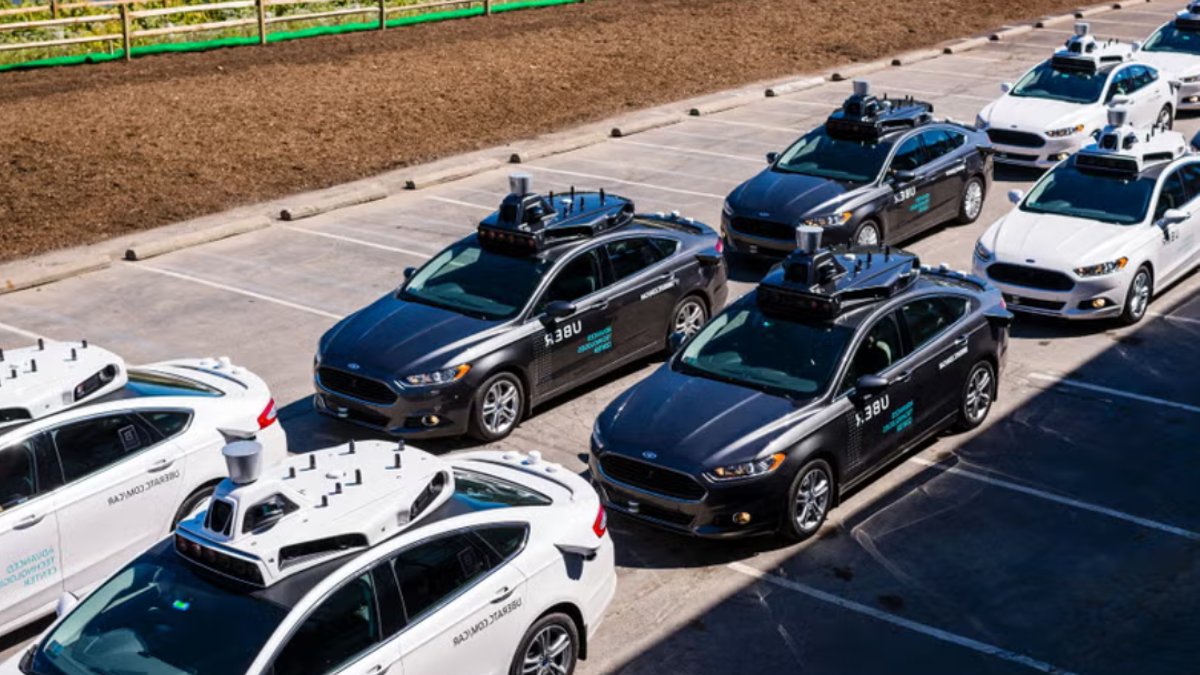
Uber plans to invest approximately $10 billion over the next few years to deploy 120,000 autonomous vehicles. The company expects to launch robotaxi services in at least 15 cities this year. Instead of developing its own self-driving system, Uber aims to serve as a platform connecting various AV technologies to riders. This approach places Uber in direct competition with Alphabet’s Waymo and Tesla as they commercialize self-driving technology. Uber discontinued its autonomous vehicle program in 2020. This robotaxi initiative comes as investors consider the impact of autonomous vehicles on its core ride-hailing business, with the stock down 13% in 2026. Some shareholders are concerned that robotaxis could disrupt the current model reliant on human drivers.
Uber states that this investment is supported by strong cash flow from its core business. This includes a record $2.8 billion in free cash flow in the second quarter. Over the past 12 months, free cash flow reached approximately $10.1 billion as bookings increased. CEO Dara Khosrowshahi stated that Uber’s strong cash generation enables this investment. CFO Balaji Krishnamurthy stated that Uber will continue leveraging its balance sheet to support growth initiatives, including AVs and international expansion. He cited Uber’s €13 billion offer for German delivery group Delivery Hero, noting that Uber has already paid approximately $4 billion for a 37% stake ahead of a formal bid.
“We’re investing from a position of strength, as we accelerate our cross-platform strategy at a global scale and build the world’s largest platform for autonomous vehicles,” he said. “Our ambition is clear: to become the world’s leading commercialization platform for autonomous mobility.”
Related: Former Rockstar Dev Predicts GTA 6 Delay
A Shift From Hardware to Software Aggregation
Rather than developing a single in-house system, Uber seeks to become the primary platform connecting multiple AV technologies to riders. After discontinuing its program in 2020 as part of cost-cutting measures, Uber has shifted to serving as an intermediary for AV startups globally. This includes agreeing to invest in vehicle fleets and taking equity stakes in companies such as Zoox, Rivian, and Lucid. Uber is also deploying hundreds of sensor-equipped vehicles to collect driving data for its partners, who use the information to train and refine their self-driving systems. This marks a change from Uber’s earlier asset-light approach.
This strategy attempts to solve the high costs of research and development by distributing them across a network of specialized partners. While the company still takes on capital exposure through fleet investments, it avoids the massive engineering overhead of designing the software stack itself. It is a bet that the network of riders matters more than the specific technology driving the car. A key partnership is with Wayve, a UK-based autonomous driving company specializing in software for complex urban environments. Transport for London said it had cleared 15 of Wayve’s modified Ford Mustang Mach-E vehicles to operate with a safety driver while the technology is tested on public roads. “I believe that it’s the UK’s first license for AV technology to operate and a big step forward for the UK,” Wayve CEO Alex Kendall told the Financial Times, adding that the approval should let the two companies offer rides to Londoners in “a matter of weeks.”
Uber contends that its base of over 200 million customers and its ability to route trips across multiple services will provide a competitive advantage as AVs become more prevalent. In the broader robotaxi market, Uber’s approach represents a clear focus on aggregation rather than in-house development. Uber supports multiple AV providers instead of relying on a single system, thereby spreading risk across partners. It remains unconfirmed whether the Delivery Hero deal will be completed or how quickly Wayve’s London service will expand beyond the initial 15 supervised vehicles. The company has not published the full list of 15 cities targeted this year or a timeline for reaching the 120,000-vehicle goal. The industry must still prove that driverless transport can be safe, scalable, and profitable. The success of this strategy depends on Uber’s ability to convert partner technology into reliable services in busy urban environments.

Former Rockstar Dev Predicts GTA 6 Delay


