Computer Helped Win World War II
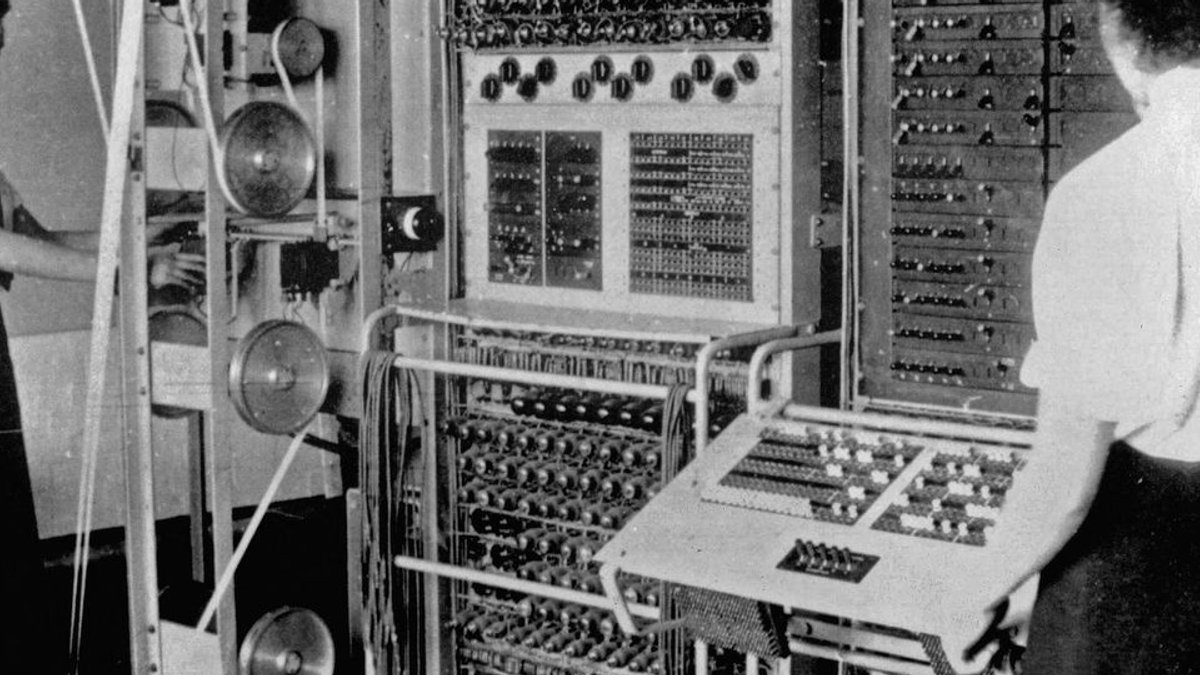
The Colossus computer helped the British military decode German messages during World War II, though its existence remained secret for decades. Built by Tommy Flowers at Post Office Research Station, the machine was designed to break the Lorenz cipher used by the German High Command. Unlike the better-known Bombe machines, Colossus worked with electronic valves rather than electromechanical relays, processing data at speeds previously unseen.
German communications relied heavily on the Lorenz SZ40 and SZ42 teleprinter machines. These devices used a complex 12-wheel cipher system to scramble messages between Berlin and field commanders. The British codebreakers at Bletchley Park needed a way to automate the analysis of these transmissions. The existing Bombe machines were not fast enough to keep up with the volume of traffic.
Tommy Flowers, a Post Office engineer, submitted a design for a valve-based machine to the government in 1943. The proposal was initially rejected because officials doubted electronic valves were reliable enough for continuous operation. Flowers spent his own money on prototype components and eventually convinced the team to build Colossus.
Related: India’s Vikram-1 rocket lifts off
The first machine, known as Colossus Mark I, became operational at Bletchley Park in January 1944. It contained 1,500 thermionic valves. Despite this high component count, the machine functioned with remarkable stability for the time. Colossus could scan through a massive number of possible wheel settings in a short period.
Breaking the Code
The machine’s primary task was to find the correct start positions for the Lorenz wheels. Once these positions were identified, human operators could manually decipher the rest of the message. The system worked by comparing a captured ciphertext with a known plaintext, such as the German header “Wilhelm.” By looking for statistical anomalies in the output, Colossus could quickly narrow down the possibilities.
British cryptographers used Colossus to read messages that were far more sensitive than those intercepted by the Enigma network. These communications often contained orders for troop movements, supply shipments, and strategic plans. The information gained from these decrypts is widely credited with influencing the outcome of several key battles on the Western Front.
Related: GlobalFoundries Eyes Quantum Hardware Production Ramp Up
While the Americans were breaking the Enigma code with their own machines, the British focused their electronic efforts on the Lorenz system. The success of the project relied on a combination of engineering innovation and human insight. Colossus provided the computational power needed to turn statistical probability into actionable intelligence.
While the project was a massive engineering success, the British government classified all details of the Colossus project for decades after the war. The machines were dismantled, and the blueprints were destroyed to prevent the technology from falling into Soviet hands. It wasn’t until 1975 that the official history of the computer was declassified, allowing historians to understand the scale of the effort.
The legacy of Colossus lives on in modern computing. The fundamental concept of using programmable electronics to process information in parallel would later evolve into the computers that power the world today. The project demonstrated that electronic valves could be used for more than just counting; they could be harnessed to solve complex logical problems in real time.

India’s Vikram-1 rocket lifts off


